close

Dance

Dance

How to Shake Off Stage Fright Before a Big Dance Performance

The moments leading up to a dance performance are often a chaotic blur of hairpins, costume adjustments, and booming music echoes from the main stage. For many dancers, this backstage environment triggers a deeply uncomfortable physical response: rapid heartbeats, trembling hands, a cold sweat, and a sudden wave of self-doubt. Stage fright is an incredibly common phenomenon, affecting everyone from beginner students to seasoned principal ballerinas.

This performance anxiety is not a sign of weakness or a lack of preparation. Instead, it is a natural psychological and physiological reaction to high-stakes situations. When you step into the spotlight, your brain perceives the audience as a collective threat, triggering your evolutionary fight-or-flight response. The secret to a flawless performance is not trying to eliminate this nervous energy entirely, but learning how to harvest, control, and redirect it into your movement.

Understanding the Physiology of Performance Anxiety

To conquer stage fright, you must first understand what is happening inside your body. When anxiety hits, your adrenal glands flood your bloodstream with epinephrine and cortisol. This hormonal surge causes your muscles to tighten, your breathing to become shallow, and your mind to race.

For a dancer, muscle tension is the enemy of fluid movement. Tight shoulders alter your alignment, stiff ankles increase the risk of injury, and shallow breathing reduces the oxygen flow needed for stamina. By recognizing these physical symptoms as mere chemical signals rather than actual evidence that you will fail, you can begin to regain control over your body.

Pre-Performance Routines to Anchor Your Mind

Establishing a consistent, predictable routine during the hours leading up to showtime is one of the most effective ways to combat anxiety. When your external environment is predictable, your internal nervous system begins to settle.

The Power of Controlled Warm-Ups

A thorough warm-up serves a dual purpose. It prepares your muscles for the physical demands of choreography, and it channels your nervous adrenaline into productive physical exertion.

  • Gradual Mobilization: Begin with gentle joint mobility exercises, focusing on your neck, shoulders, and hips where stress commonly accumulates.

  • Cardiovascular Elevation: Spend five minutes jumping rope, doing jumping jacks, or jogging in place. This matches your internal heart rate to the adrenaline rush, tricking your brain into thinking the elevated heart rate is due to exercise rather than fear.

  • Proprioceptive Focus: Engage in balance exercises. Standing on one leg with your eyes closed forces your brain to focus entirely on internal bodily awareness, pulling your attention away from external anxieties.

Mental Rehearsal and Spatial Mapping

Backstage chaos can easily distract you from your choreography. Use systematic visualization techniques to ground your focus.

  • Closed-Eye Run-Throughs: Find a quiet corner backstage, close your eyes, and mentally walk through your entire routine to the timing of the music. Visualize yourself executing difficult turns perfectly and landing leaps softly.

  • Stage Walk: If possible, walk the physical stage before the audience arrives. Identify the center point, note the locations of the wings, and check the texture of the floor. Familiarizing yourself with the physical space removes the element of the unknown.

Somatic and Breathing Techniques for Instant Calm

When you are standing in the wings waiting for your cue, you need rapid-acting tools to down-regulate your nervous system. Somatic exercises focus on using the body to calm the mind.

Box Breathing

This breathing technique is utilized by high-performance individuals, from athletes to military personnel, to instantly lower heart rates and restore mental clarity.

  1. Inhale deeply through your nose for a slow count of four.

  2. Hold that breath in your lungs for a count of four.

  3. Exhale completely through your mouth for a count of four.

  4. Hold your lungs empty for a count of four.

  5. Repeat this cycle four to five times until your heartbeat stabilizes.

Progressive Muscle Relaxation

Because stage fright causes unconscious muscle gripping, intentionally tightening and releasing your muscles can break the cycle of tension.

  • The Technique: Scrunch your toes as hard as you can for five seconds, then release them completely. Move up to your calves, thighs, glutes, core, shoulders, and jaw, tensing each zone before intentionally letting it melt into relaxation.

Shifting Your Psychological Perspective

Much of the terror associated with stage fright stems from cognitive distortions. Dancers often place undue pressure on themselves by focusing on perfection rather than expression.

Reframing Nervousness as Excitement

Physiologically, nervousness and excitement are identical states of arousal. Both involve a racing heart, heightened alertness, and a surge of energy. The only difference is the mental label you assign to the sensation. When you feel the familiar flutter in your stomach, consciously tell yourself that your body is simply getting excited to perform rather than being afraid of it.

Shifting Focus from Self to Audience

Anxiety makes you hyper-focused on your own perceived flaws. You worry about dropping a prop, forgetting a step, or looking awkward. To counteract this, shift your intention outward. Remember that the audience did not buy tickets to judge you; they came to be entertained, inspired, and moved. Treat your dance as a gift you are presenting to the audience rather than a test you must pass.

Practical Backstage Logistics

Sometimes, logistical oversights can amplify performance anxiety. Ensuring your gear and environment are managed will keep unexpected stress at bay.

  • Pack an Emergency Kit: Eliminate the fear of a wardrobe malfunction by carrying extra bobby pins, safety pins, clear nail polish for tights, hairspray, and extra tape. Knowing you can fix any issue instantly builds confidence.

  • Manage Your Diet and Hydration: Avoid high-sugar snacks or excessive caffeine before going on stage, as these can exacerbate tremors and palpitations. Opt for complex carbohydrates and lean proteins, such as oatmeal or a banana with peanut butter, to provide sustained energy.

  • Limit Negative Social Interactions: Stay away from anxious peers backstage who are venting about their fears or obsessing over mistakes. Politely excuse yourself, put on headphones, and listen to a calming playlist or the performance track.

Frequently Asked Questions

What should I do if I forget my choreography while on stage?

If your mind goes blank mid-performance, the most important rule is to keep moving. Never stop, look shocked, or run off the stage. Lean into the music, use improvisation that matches the style of the piece, and look for a clear opportunity to jump back into the choreography when you recognize a specific musical cue or formation change. The audience rarely knows the exact choreography, so if you keep moving confidently, they will assume it was intentional.

How can I stop my legs from shaking during slow, controlled balances?

Shaking legs are typically caused by an excess of adrenaline combined with shallow breathing. To stabilize your limbs, focus heavily on grounding your weight into the floor through your supporting leg. Intentionally engage your core muscles to take the pressure off your extremities, and exhale deeply during the extension or balance to release the trapped muscular tension.

Is it helpful to look directly at people in the audience?

For most dancers struggling with stage fright, looking directly into the eyes of audience members can heighten anxiety. Instead, look slightly above the heads of the crowd, focusing on the back wall of the theater, the balcony seating, or the tech booth. This allows you to maintain proper head alignment and project your performance outward without getting distracted by individual faces.

What if I make a glaring mistake in front of a panel of judges?

Judges are not just looking for a technically perfect performance; they are evaluating your professionalism and resilience. If you fall, slip, or miss a beat, recover immediately with a smile and continue dancing with maximum energy. A dancer who handles a mistake with grace and unwavering confidence often scores higher than a dancer who gives up mentally after a minor error.

How soon before a show should I stop practicing the routine?

Stop drilling the choreography intensely at least thirty minutes before you are scheduled to perform. Over-practicing at the very last minute leads to physical fatigue and mental burnout. Use those final thirty minutes exclusively for mental visualization, breathing exercises, and maintaining a light, warm body temperature.

Can stage fright ever completely go away over time?

While the physical rush of adrenaline rarely disappears completely, your relationship with it will change. With consistent performance experience and the regular application of anxiety management techniques, the terror will transform into a manageable buzz of excitement. You will learn to recognize the feeling not as fear, but as your body preparing to perform at its absolute highest level.
read more
Dance

The Ultimate Guide to Choosing the Perfect First Dance Song

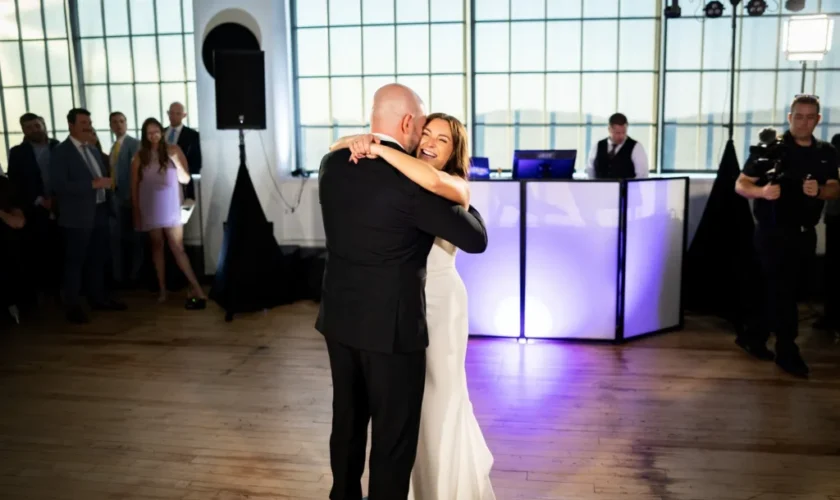
Your first dance as a married couple is one of the most anticipated moments of your wedding day. It is a tradition that signifies your debut to society as a partnership, capturing the essence of your romance in a few short minutes. For many couples, however, selecting the single piece of music that will accompany this moment feels overwhelming.

With thousands of potential songs spanning decades and genres, narrowing the choice down to one track requires careful thought. The ideal song needs to balance your personal history, your technical comfort level on the dance floor, and the overall atmosphere of your celebration. This comprehensive guide will walk you through the essential steps to discover, evaluate, and select a first dance song that feels authentically yours.

Understanding Your Couple Style

Before scrolling through endless streaming playlists, take a step back and examine your shared identity as a couple. Your first dance song should reflect your real-world relationship rather than a generic standard of what a wedding should be.

Identifying Shared Musical Memories

The most meaningful songs often come from your own history. Sit down together and brainstorm your musical milestones by asking yourselves these questions:

  • What concerts have you attended together?

  • Is there an album you played on repeat during a memorable road trip?

  • What song was playing in the background during your first date or your proposal?

  • Do you have a favorite artist or band that you both genuinely love?

Matching the Vibe of Your Wedding

Your song choice should complement the overall aesthetic and venue of your wedding. A grand ballroom reception calls for a different musical energy than a casual barefoot ceremony on a beach.

  • Classic and Elegant: If you are hosting a traditional black-tie affair in a historic venue, timeless tracks by artists like Etta James, Frank Sinatra, or Nat King Cole establish a sophisticated atmosphere.

  • Modern and Trendy: For a contemporary loft or museum wedding, current indie, R&B, or pop ballads by artists like Leon Bridges, Taylor Swift, or John Legend fit perfectly.

  • Rustic and Relaxed: A barn, vineyard, or backyard wedding pairs beautifully with acoustic, folk, or country melodies from artists like Chris Stapleton, Kacey Musgraves, or The Lumineers.

Evaluating the Practicalities: Lyrics, Tempo, and Length

A song might sound beautiful in your car, but dancing to it in front of a room full of guests presents a different set of challenges. You must analyze the technical elements of the music before making a final commitment.

Analyzing the Lyrics

It is incredibly common for couples to choose a song based entirely on a catchy melody, only to realize later that the lyrics describe a breakup, unrequited love, or infidelity.

Take the time to read the full lyric sheet. Ensure the narrative celebrates commitment, mutual respect, and enduring love. While a little bit of melancholy can add emotional depth, you generally want to avoid songs that dwell on heartbreak or toxic relationship dynamics on your wedding day.

Finding the Right Tempo

The tempo of the song dictates how you will move across the floor. If you plan to take professional ballroom dance lessons, consult your instructor early on.

  • The Slow Sway: Songs with a 4/4 time signature and a relaxed, slow tempo are ideal if you plan to simply sway back and forth.

  • The Traditional Waltz: If you want a classic, sweeping dance, you will need a song written in a 3/4 time signature, such as Norah Jones’s “Come Away With Me.”

  • Upbeat and Choreographed: If you want to surprise your guests with a high-energy routine, look for mid-tempo or upbeat pop, funk, or soul tracks.

Managing Song Duration

The sweet spot for a first dance song is between two and three minutes. Anything longer than three and a half minutes can begin to feel tedious for your guests and physically exhausting for you, especially if you are wearing heavy formal wear.

If your dream song is four or five minutes long, ask your wedding DJ or live band to create a custom edit. They can seamlessly fade the track out early or cut out a repetitive bridge to keep the performance concise and engaging.

Categorizing Potential Song Options

To help inspire your search, it helps to look at potential tracks across different thematic categories. Here are some of the most enduring and impactful styles of first dance music.

Timeless Classics

These tracks have stood the test of time and carry a universal appeal that resonates across generations.

  • “At Last” by Etta James

  • “Can’t Help Falling in Love” by Elvis Presley

  • “Unforgettable” by Nat King Cole

  • “Fly Me to the Moon” by Frank Sinatra

  • “Your Song” by Elton John

Modern Romantics

If you prefer contemporary songwriting and production, these modern tracks offer deep romantic sentiment.

  • “Beyond” by Leon Bridges

  • “Lover” by Taylor Swift

  • “Die With A Smile” by Bruno Mars and Lady Gaga

  • “Conversations in the Dark” by John Legend

  • “First Times” by Ed Sheeran

Indie and Alternative Gems

For couples who want something unique and less mainstream, indie and alternative artists offer highly poetic options.

  • “First Day of My Life” by Bright Eyes

  • “You Are the Best Thing” by Ray LaMontagne

  • “Simply the Best” by Noah Reid

  • “Real Love Baby” by Father John Misty

  • “Sea of Love” by Cat Power

Tips for the Perfect Dance Performance

Once you have selected your song, a few practical preparations will ensure that the actual performance goes off without a hitch.

  • Practice in Your Wedding Shoes: Do not wait until the wedding day to find out that your shoes slip on polished floors or that your heels catch on the hem of your garment. Practice dancing together in the exact footwear, or shoes of identical height, that you will wear to the reception.

  • Consider Your Attire: A restrictive mermaid gown, a long train, or a tight tuxedo jacket will limit your range of motion. Keep your wardrobe in mind when planning spins, dips, or lifts.

  • Coordinate with Your Photographer and Videographer: Let your media team know if you have choreographing moments, such as a dramatic dip at the very end of the song. This ensures they are positioned correctly to capture the shot.

Frequently Asked Questions

What should we do if we cannot agree on a single song?

If you and your partner have completely different musical tastes, look for compromise through cover versions. For example, if one person loves heavy rock and the other prefers acoustic pop, look for an acoustic or orchestral cover of a favorite rock song. Alternatively, you can use one person’s choice for the ceremony processional and the other’s choice for the first dance.

Is it acceptable to choose an upbeat song instead of a ballad?

Absolutely. There are no rules stating that a first dance must be slow. An upbeat song is an excellent way to set an energetic, joyful tone for the rest of the reception and can seamlessly transition into opening the dance floor for all of your guests.

When during the reception should we do the first dance?

The two most common timelines are either immediately after your grand entrance into the reception room or right after the dinner service concludes. Dancing immediately after your entrance capitalizes on the high energy of the room and gets the performance out of the way so you can relax for the rest of the evening. Dancing after dinner serves as the perfect catalyst to transition guests from their tables to the dance floor.

Should we take professional dance lessons?

Dance lessons are not mandatory, but they are highly recommended if you feel anxious about dancing in public. Even just two or three sessions can provide you with a basic framework, improve your posture, and give you the confidence needed to avoid the standard high school sway.

How do we handle live band performances versus the original recorded track?

If you have hired a live band, ask them early on if they are willing to learn your song. Keep in mind that a live band will sound different than the original studio recording. If you are deeply attached to the specific vocal styling or production of the original track, it is completely acceptable to ask your band or DJ to play the recorded version instead.

What if we get nervous and want to cut the dance short?

You can establish a cue with your DJ or band leader before the reception begins. Agree on a signal, such as a nod or a specific hand gesture, that tells them to smoothly fade out the music whenever you feel ready to finish, even if it is only ninety seconds into the song.

read more
Dance

The Timeless Language of Dance: Movement as Expression and Connection

Dance, in all its myriad forms, is far more than the rhythmic movement of bodies to music. It is an ancient, instinctive language that transcends barriers of culture, geography, and even time. From the ritualistic dances of early human civilizations to the modern fusion of street styles and contemporary ballet, dance has always served as a potent conduit for emotion, storytelling, and communal identity.

At its core, dance is the embodiment of expression. Where words falter, movement speaks. It captures the ineffable—those fleeting, complex emotions that are difficult to articulate. In a world increasingly reliant on digital and written communication, the physical immediacy of dance remains a powerful reminder of the human need for tactile and emotional resonance. The twist of a torso, the gentle arc of a hand, or the stamp of a foot can convey joy, grief, defiance, and longing with a clarity that no text message could replicate.

Historically, dance has been deeply interwoven with spiritual and social practices. In many indigenous cultures, it is not merely an art form but a sacred act, used in rituals to communicate with deities, honor ancestors, or mark significant life transitions. The whirling dervishes of the Sufi tradition, for instance, use dance as a form of meditative devotion, where the repetitive, spiraling movement becomes a vehicle for transcending the self and approaching the divine. Similarly, the vibrant dances of African tribes, the intricate gestures of Indian Bharatanatyam, and the exuberant circle dances of Eastern Europe each reflect the values, myths, and rhythms of the societies that birthed them.

In the West, the evolution of dance has mirrored broader cultural shifts. During the Renaissance, dance transitioned from courtly pastime to refined spectacle, with ballets staged in the grand halls of European nobility. These performances, meticulously choreographed and elegantly costumed, celebrated grace, order, and narrative. Ballet, with its emphasis on line, poise, and precision, became the benchmark of high artistic achievement—a tradition that continues to command reverence today.

Yet, with the advent of the 20th century came an explosion of new forms that challenged traditional hierarchies and definitions. Modern dance pioneers like Isadora Duncan and Martha Graham rejected the rigid structures of classical ballet in favor of more natural, expressive movement. They sought authenticity, drawing inspiration from the body’s innate impulses and the emotional undercurrents of life itself. This shift democratized dance, making space for the individual—regardless of class or formal training—to find a voice through movement.

In tandem with these innovations came the rise of popular and street styles. Jazz, tap, hip-hop, breakdancing—all emerged from marginalized communities as expressions of identity, resistance, and resilience. These forms, often improvisational and deeply rooted in rhythm, underscored dance’s role as a living, breathing commentary on society. They also highlighted its communal nature: in cyphers, on street corners, and in clubs, dance became a dialogue—a way for people to connect, compete, and create together.

One cannot speak of dance without acknowledging its physicality. It demands discipline, stamina, and an intimate understanding of one’s body. Dancers often train for years to master techniques, build muscle memory, and refine their craft. Yet, within this physical rigor lies a paradox: the best dancers make it look effortless. The power of a grand jeté or the subtle tension of a sustained arabesque can move audiences precisely because they seem to transcend physical limitation. This illusion of effortlessness, however, is the result of relentless practice, injury, and an unwavering commitment to the art.

Dance also offers profound psychological and emotional benefits. Studies have shown that dancing can reduce stress, improve cognitive function, and boost mood. It fosters mindfulness—when dancing, one is wholly present, attuned to the beat, the breath, the space. In a time when mental health challenges are increasingly prevalent, the therapeutic potential of dance should not be underestimated. Dance therapy, in particular, has emerged as a powerful modality for individuals coping with trauma, illness, or emotional blocks. By moving the body, one often unlocks hidden truths of the mind.

Moreover, the world of dance today is more diverse and dynamic than ever. Choreographers and dancers are breaking boundaries, fusing genres, and embracing hybridity. TikTok trends now sit alongside classical repertory; K-pop routines share the stage with flamenco and salsa. This global interchange enriches the dance landscape, allowing for innovation while honoring tradition. At the same time, it raises important questions about cultural appropriation versus appreciation—issues that the dance community continues to navigate with increasing sensitivity and awareness.

Technology, too, has expanded dance’s reach. Digital platforms enable dancers from remote corners of the world to showcase their work, collaborate, and inspire one another. During the COVID-19 pandemic, virtual performances and Zoom classes sustained the dance world, proving that while the stage may be a traditional home, the spirit of dance is far from confined to any single space.

Ultimately, dance is about connection—connection to the self, to others, and to something larger. It is both deeply personal and profoundly universal. Whether one is a seasoned performer or an untrained participant swaying to a favorite song, the impulse to move is innate. It is in our biology, our history, our collective memory. In dance, we find freedom, purpose, and belonging.

As the world continues to change—rapidly, sometimes chaotically—dance endures. It reminds us that even in silence, we can speak. Even in stillness, we can feel. And even in difference, we can find harmony.

read more
Dance

What’s in store at a Dance Event

There are numerous open doors that emerge while going to a move occasion, rivalry or journey. Probably the best advantage that you will encounter is being encircled by similarly invested individuals. Individuals that share your enthusiasm and want to move, expand their viewpoints and increment their expertise level and information. You make certain to be roused and tested, also stunned by the tremendous levels and capacities of artists from a wide range of areas.

Most occasions offer broad workshops educated by top educators in their specialized topic. You should recollect that every educator will offer their very own way of thinking, style and procedure and may fluctuate from teacher to teacher. It is significant for you to recall that you will be unable to utilize everything that you learn, yet to apply what you like and find valuable and not harp on the rest. Try not to contend with or attempt to address the teacher.

There will be numerous classes offered in a wide range of move styles so it is a smart thought to be specific in your decisions to not overpower and disappoint yourself. Your cognizance and capacity to hold data will rely on your present expertise level and capacity to process and hold broad data. You should audit the schedule toward the start of the occasion and pick the classes that most intrigue you.You will have a substantially more fruitful time on the off chance that you ace a couple of new procedures or moves that you can carry home with you, than if you simply return home with a disordered brain. It is a smart thought to record what you have realize after each class, and even do a video recap of what you have realized. Ask somebody that has taken the class to go through it with you and attempt to catch it on film or even your PDA.

Obviously there is likewise the widely adored activity……..Dancing, All night long!!! It isn’t extraordinary to wind up creeping to your room at 5 or 6 am. Having the chance to hit the dance floor with all degree of artists merits the cost of the ticket alone. You will be stunned at exactly how much your moving abilities improve in one brief end of the week. You will meet numerous individuals and proceed to “move” into them at different occasions.

To help from turning out to be overpowered and disappointed, make certain to take breaks, remain hydrated and supported and invest significant time to have a ton of fun! Take what you have figured out how to the move social move floor and kick up your heels. It is the redundancy of what you have discovered that will assist you with bringing it home.

read more
Dance

Best Dance Band Options For Corporate Events

Whip it with a super move band choice to keep your new kid on the block group occupied when the preparation is finished. You don’t need them sitting at the bar drinking up the benefits, yet rather on the move floor meeting, welcoming, and making some incredible memories!

At the point when your best move band includes the Electric Slide, you should check the age of your normal participant.

Who is your market crowd?

At the point when you know the normal times of your colleagues and the music styles that keep them moving until late, you’ll have a superior thought of which groups to pick. Your best move band alternative might be overwhelming metal, or it could be crooners? Be that as it may, you, as the occasion organizer must know the distinction. You’ll have to comprehend which groups sing what tunes, and it’s least demanding to find that data when you recruit a band from a notable amusement or show band temporary worker.

When do you enlist the band?

Most everybody realizes you can’t locate the best amusement alternatives in the event that you hold up until the last-moment to employ, however on the off chance that you do… Never come up short, there are some incredibly, notable, ritzy, show band contractual workers who have a rundown of extraordinary move groups, and scene performers to look over. Simply call one of them! Be that as it may, how would you realize when is the best an ideal opportunity to employ the best band? You should begin calling around when you have a date and setting for your occasion. Locate a couple of extraordinary alternatives and get duplicates of their “advertise promotions” before you make the last determination. Ask what melodies they play and get a decent playlist of recognizable tunes to browse before the date of the occasion.

Check appearances, and if conceivable go to an occasion with your preferred band, before recruiting them. The amusement contractual worker ought to have the option to get you out with this solicitation.

Why you need a contractual worker?

A key component of employing the best band is finding a move band that is accessible in your general vicinity. You could go through days searching out the names of different move band alternatives, or you could simply call a temporary worker in your general vicinity who has a rundown of value groups. Trust me when I state, it’s far simpler to recruit an extraordinary band through a contractual worker.

read more
Dance

Proficient Dancers for Hire – Perfect Entertainment for Big Events

With regards to artists for enlist there are numerous sorts to browse. Alongside artful dance, jazz, present day, hip jump, tap, or numerous other basic styles of move diversion, you can likewise discover hula artists, tummy artists, and even outlandish artists. Since TV shows, for example, Dancing with the Stars thus You Think You Can Dance initially showed up, moving as a type of amusement has made its mark. These and other moving shows have surprised the world and are currently the absolute most-watched appears on TV.

Notwithstanding watching proficient artists on TV, it has become an incredibly well known type of diversion at major corporate occasions, private gatherings, and other significant events. All things considered, who wouldn’t have any desire to watch Kym Johnson, a double cross victor of Dancing with the Stars, or heart breaker Maksim Chmerkovskiy, live in front of an audience as they play out their gaudy and vigorous schedules? Also, if artists like this are more than your spending will permit, you can in any case locate some exceptionally capable, albeit less well known, artists for employ that will put on an astonishing act for your unique occasion.

In case you’re facilitating an island grill you will presumably need to utilize some island or hula artists, for example, the Polynesian Pearls. The Polynesian Pearls is a group of artists for enlist have been playing out their fascinating island moves for more than 30 years at corporate occasions, public expos, fairs, and numerous different occasions everywhere throughout the country. In case you’re searching for a real island treat that everybody will appreciate and recollect, include some hula and Polynesian artists to the blend.

In the event that a whole group of hula artists is a lot, perhaps a tummy artist is the thing that you need. This sort of extraordinary artist can include a lot of fervor to numerous kinds of gatherings, utilizing a scarf, cloak, and different props for included energy. Midsection artists are regularly employed for birthday and commitment parties, social occasions, fairs and celebrations, and even corporate occasions. A few artists will even give exercises to the visitors, an intuitive method to transform a standard occasion into a life-changing event.

Presumably the most famous kind of move diversion is partner dancing, which is the thing that you’ll as a rule find in films, in front of an audience, and on TV appears. These moves include accomplices and are broadly delighted in at corporate occasions and other significant undertakings. They incorporate the Waltz, Nightclub Two Step, Latin Swing, Paso Doble, and numerous others. There’s nothing very like watching proficient artists for enlist do high-vitality numbers like the Quickstep or sentimental understandings of the Rumba. At the point when you are sorting out a significant occasion and you will just aside from the best and most-energizing believable, utilizing artists for enlist like you see on Dancing with the Stars is a definitive diversion. Viewing Maksim Chmerkovskiy, Kym Johnson, or Dmitry Chaplin live in front of an audience is a great deal more energizing than seeing them on the little screen.

Whenever you compose an occasion where diversion will be utilized, genuinely consider employing artists for the event. With some high-vitality artists your visitors will have the option to encounter a show that will help the degree of power ten times. In the event that you need to set up a gathering that will have everybody speaking for quite a long time about it, moving amusement is a strong decision.

read more
Dance

The most effective method to Dance Solo Salsa

Realizing how to move solo salsa is probably the most ideal ways you can have some good times salsa moving. Salsa solo or salsa sparkle is the point at which a salsa artist chooses to move solo. On the off chance that the person in question is hitting the dance floor with an accomplice, the artist might need to move independently and alone.

Salsa is known to be an accomplice move. Now and then however accomplices will move independently and move alone. This part is known as a sparkle. The term is most likely gotten from tap move alluded to as ‘tap sparkle’.

At the point when salsa move includes accomplices, the sparkle second is the point at which each accomplice does their own extravagant move moves. The accomplices can both hotshot some multifaceted footwork and body developments. These means are as far as anyone knows extemporaneous however it will be ideal to have them arranged on the grounds that one may experience issues doing spontaneous creations before an enormous group.

Solo salsa moving is advantageous for novices who need to realize how to move salsa yet would prefer not to stress over finding an accomplice to hit the dance floor with.

Among every Latin move, salsa moving is viewed as one of the most energizing ones. Adding Salsa tries to please routine will make it much all the more fascinating.

Salsa is typically an accomplice move. Do the typical salsa routine with your accomplice toward the beginning of the move. You should make the move look energizing. The crowd will likewise come to welcome the energy you infuse to the move. This will set the disposition for the salsa sparkle moves later.

Split from your accomplice at the center of the move. You can do this at one point of the move. The split away part is frequently arranged. This will feature the distinctive move moves, strategies and extravagant footwork of each accomplice. The other accomplice may enjoy a short reprieve as his accomplice takes the middle stage.

The accomplice who needs to do a confounded advance may likewise require a breather before doing the said step. This will highlight the mind boggling footwork or body activity that the accomplice will do.

The genuine salsa sparkle will comprise of extremely propelled footwork or garish move moves that will work out in a good way for the music. Salsa sparkle plans to highlight the individual accomplice. As the name infers, each accomplice or one of the accomplices will have their second to sparkle. On the off chance that you are the accomplice who needs to do the salsa sparkle, at that point you need to add your particular moves to your salsa moves.

As you develop in understanding and ability in salsa moving, the sparkle will be simpler to do. It won’t be as nerve wracking as you might suspect it will be. Your move moves will come to you normally with time and consistent practice. You really appreciate the consideration you get from doing it. This is the motivation behind why rehearsing and building up your salsa moving abilities are of prime significance.

While doing the salsa sparkle hope to do some free-form moves. The accomplice will part and moving will be separately not as a team. The independent salsa must follow a specific cadence which is speedy brisk moderate. Regardless of what extravagant moves you choose to appear, they should move to the beat.

After your sparkle second, accomplices rejoin and proceed with salsa moving. The get-together ought to happen at one point. The two accomplices should then get ready for the finale. Figuring out how to move salsa sparkle will empower the artist to create and develop in their salsa moving abilities.

read more
Dance

Free-form Dance – Find Out How to Express Yourself in Dance

Have you at any point thought about taking moving exercises? There are such huge numbers of kinds of exercises accessible now days that it might be difficult to pick the correct style for you. Couples dancing, artful dance, line moving, jazz, tap, hip-bounce, salsa, free-form move, and hip twirling are only a portion of the assortments of move that you can learn. Figuring out how to move takes physical quality, adaptability, coordination and eagerness, in addition to other things. Exercises are accessible all finished; you can take nearby classes at a studio, you can discover classes at your state or junior college, you can even take classes on the web or by means of DVD. So how would you realize which style and sort of class are directly for you?

Most importantly, think about your character. On the off chance that you are a somewhat mannered and calm individual, you may not feel great bouncing feet first into a salsa schedule. Then again, it might be the perfect apparatus to assist you with breaking out of an example of modesty. On the off chance that you are open and active, free-form move may be your specialty. Tap is extraordinary for an individual that is extremely rhythmical. Hip twirling is marvelous for the individual searching for something new and energizing. On the off chance that you take a few exercises and later locate that a specific style doe not suit you, not everything is lost. You have still taken in some significant center moves that can be applied to different styles of moving.

In the event that you are not right now dynamic, moving exercises may come as somewhat of a physical stun to you. As elegant as the moves look, moving is in reality extremely difficult work. Counseling a doctor preceding taking classes is a smart thought. You might need to consider beginning with an ordinary cardio and weight preparing normal and afterward joining that with moving. You can even practice some free-form move during your exercises! The fact of the matter is that you will need to be in genuinely acceptable physical shape before your classes begin. Adaptability is another key point. All styles of moving include turning, contorting, twisting, coming to and constrained strong extending. Warm up activities will enable your muscles to adapt. Remembering a decent extending everyday practice for your day by day practice is a decent propensity to make.

Coordination is a great idea to have, particularly with expressive dance, tap, free-form move and jazz, albeit all moves expect this somewhat. Luckily, coordination can be instructed in the event that you are not a naturally planned individual. Activities including parity will help, as will uncommon hand and eye works out. Energy appears to fall into place easily once individuals begin moving! It is fun and thrilling. Transform on your music and stroll into your family room. Start a free-form move to whatever music happens to be on. How would you feel? From the outset you may feel somewhat senseless moving without anyone else in your family room, yet once you move beyond that, it is truly pleasurable. Moving can assist you with stress help, weight reduction, confidence issues, sadness, and then some. In the event that you are as yet uncertain, ask about a free class with your neighborhood studio. They normally permit you to partake in one complimentary class. This permits you to make a reasonable assurance if moving is directly for you.

read more